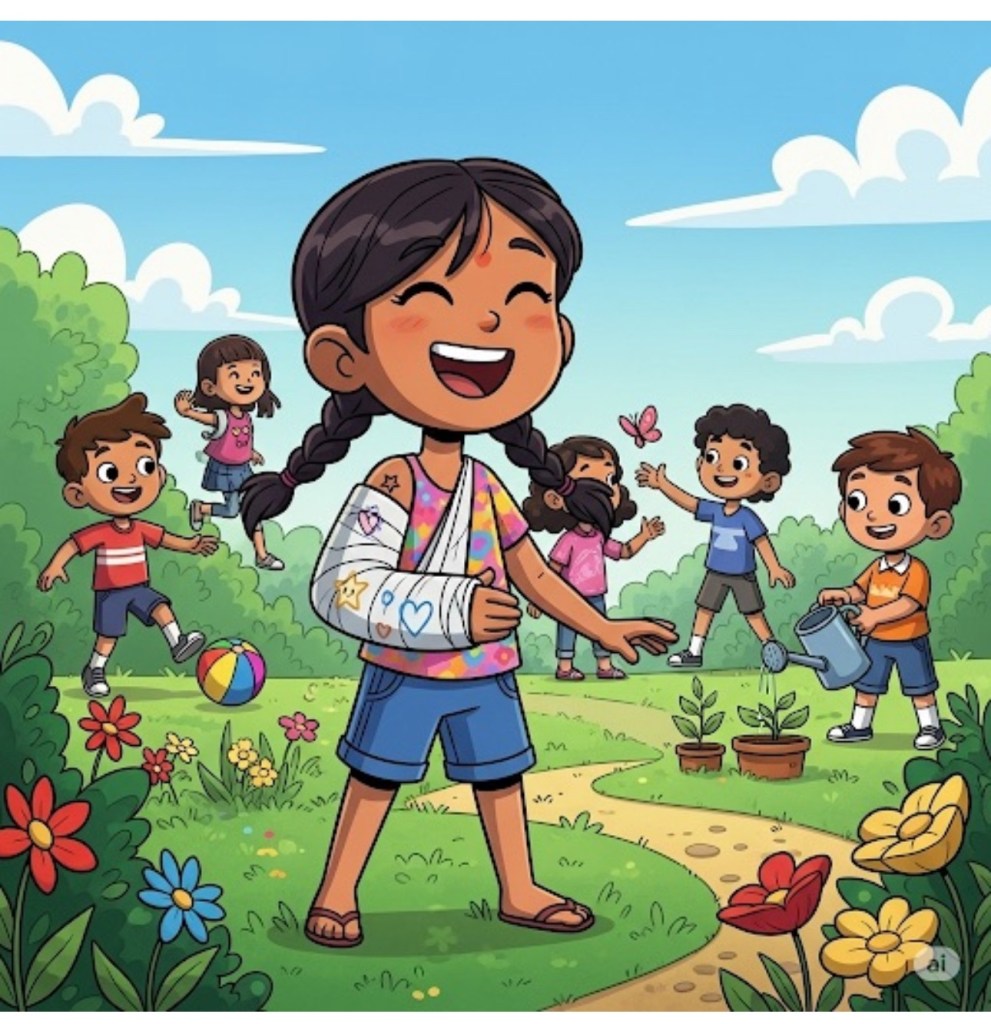
Hello my village….. my warmest wishes for you are that your emotions merge like rivers into the ocean and carry you into your visions.
Life, in its intricate tapestry, rarely presents itself in monochrome. We often perceive emotions as distinct, opposing forces—joy on one side, pain on the other, with a vast chasm between them. Yet, a deeper understanding reveals that the human mind is not a finite container where one emotion must displace another. Instead, it possesses an extraordinary capacity to hold multitudes, allowing us to experience both profound joy and acute pain, sometimes even simultaneously. To deny this inherent duality is to live an incomplete and often frustrating existence, where we unrealistically expect one emotion to entirely eclipse the other.
Consider the bittersweet nature of many significant life events. A parent watches their child leave for college, brimming with pride and joy for their independence and future, yet simultaneously feeling a sharp pang of loss and sadness at the impending emptiness of their home. A survivor of a serious illness celebrates their recovery with immense gratitude and happiness, while still carrying the lingering ache of the trauma they endured. These aren’t contradictory experiences; they are interwoven threads in the fabric of human emotion. The joy of the child’s growth doesn’t negate the parent’s sorrow, nor does the triumph of recovery erase the memory of suffering. Both exist, occupying their own valid spaces within the conscious mind.
The danger of believing that one emotion must dominate is that it leads to an unrealistic expectation of emotional purity. If we think joy must be absolute, any hint of sadness is seen as a flaw, a failure to be truly happy. Conversely, if we are in pain, we might feel guilty for experiencing moments of lightness or laughter, as if they diminish the validity of our suffering. This black-and-white thinking creates internal conflict, preventing us from fully engaging with our diverse life experiences. When my daughter would participate in debate tournaments it was initially hard for her to admit how much she enjoyed the process of debating ideas with her peers- if it was a day her team lost. Often, the sad expressions of her teammates would suppress her from expressing how fun it had been to be so intellectually stimulated and to respect and admire the talent of the opposing team. This type of challenge led me to practice “but” sentences to express the spectrum of internal experiences in kids and adults. She would say “ I’m sad about the loss but I truly enjoyed the competition.” Otherwise it can lead to the suppression of genuine feelings, as we try to force ourselves into a single emotional state, or to a sense of inadequacy when we inevitably fail to do so. Our mind has the capacity for both, and it is in acknowledging and accepting this coexistence that we find a more authentic and resilient way of being.
This is where mindfulness becomes an invaluable tool. Mindfulness, at its core, is the practice of paying attention to the present moment, without judgment. It’s about observing our thoughts, feelings, and bodily sensations as they arise, acknowledging their presence, and letting them be. When applied to emotions, mindfulness helps us to:
1. Recognize and Label: Instead of being swept away by a dominant emotion, mindfulness allows us to pause and identify what we are feeling. We can say, “Ah, there is joy,” and “And here is a touch of sadness.” This simple act of labeling creates a small space between us and the emotion, preventing it from consuming our entire being.
2. Witness Without Judgment: Mindfulness teaches us not to judge our emotions as good or bad, right or wrong. It’s okay to feel happy and sad at the same time. This non-judgmental stance reduces the internal conflict that arises from trying to force ourselves into a single emotional state.
3, Create Space: By observing emotions mindfully, we realize that they are transient. They arise, they stay for a while, and then they pass. This understanding creates mental space, allowing different emotions to co-exist without one needing to annihilate the other. We see that our mind is vast enough for both the bright sun of joy and the passing clouds of pain.
4. Engage Fully: When we accept the full spectrum of our emotions, we can engage more fully with life. We don’t have to wait for perfect happiness to appreciate a moment, nor do we have to let pain paralyze us from experiencing any lightness. We learn to navigate the complexities, finding moments of beauty and connection even amidst challenges.
Teaching children to mindfully accept and navigate the existence of several emotions is crucial for their emotional well-being and overall happiness. Children, often more attuned to their immediate feelings, can easily become overwhelmed if they believe only one emotion is acceptable at a time. If they are taught that sadness is “bad” and must be pushed away, they may struggle to process grief or disappointment. If they are told to “just be happy” when they are clearly upset, they learn to distrust their own emotional landscape.
Mindfulness offers children a framework to understand their inner world:
Emotional Literacy:
They learn to identify and name their feelings, understanding that it’s normal to feel a mix of things. “I’m excited about the party, but I’m also a little nervous about meeting new people.” This honest self-assessment is foundational.
Resilience:
By accepting that difficult emotions are part of life, children develop resilience. They learn that pain doesn’t last forever and that joy can still be found even when things are tough. This prevents them from being completely derailed by setbacks.
Empathy:
Understanding their own complex emotions helps them to empathize with others. They can better grasp that a friend might be happy about a new toy but also sad about a pet that passed away, fostering deeper connections.
Authenticity:
When children are allowed to feel and express their full range of emotions, they grow into more authentic individuals. They don’t feel the need to mask their true feelings, which is vital for mental health.
Joy in the Everyday:
By not waiting for a perfect, pain-free state, children can find joy in small moments, even when other challenges exist. They learn to appreciate the warmth of a hug or the beauty of a sunset, even if they’re also feeling frustrated about homework.
Our human mind is not designed to be a monochrome canvas, but a vibrant palette where joy and pain can coexist, often blending to create unique shades of experience. To deny this capacity is to limit our understanding of ourselves and the world. By embracing mindfulness, we cultivate the awareness and acceptance needed to navigate this rich emotional landscape. Teaching children this profound truth empowers them to experience a more authentic, resilient, and ultimately happier life, where the full spectrum of human emotion is not just tolerated, but understood and integrated as part of their diverse and beautiful journey.
Let’s designate this week my friends as one where we write down or acknowledge our periods of opposing emotions… what you’re doing at that time and how you help yourself and your kids ride those emotions without judgement. Namaste until next week….

 The Mindful Mom
Leave a comment